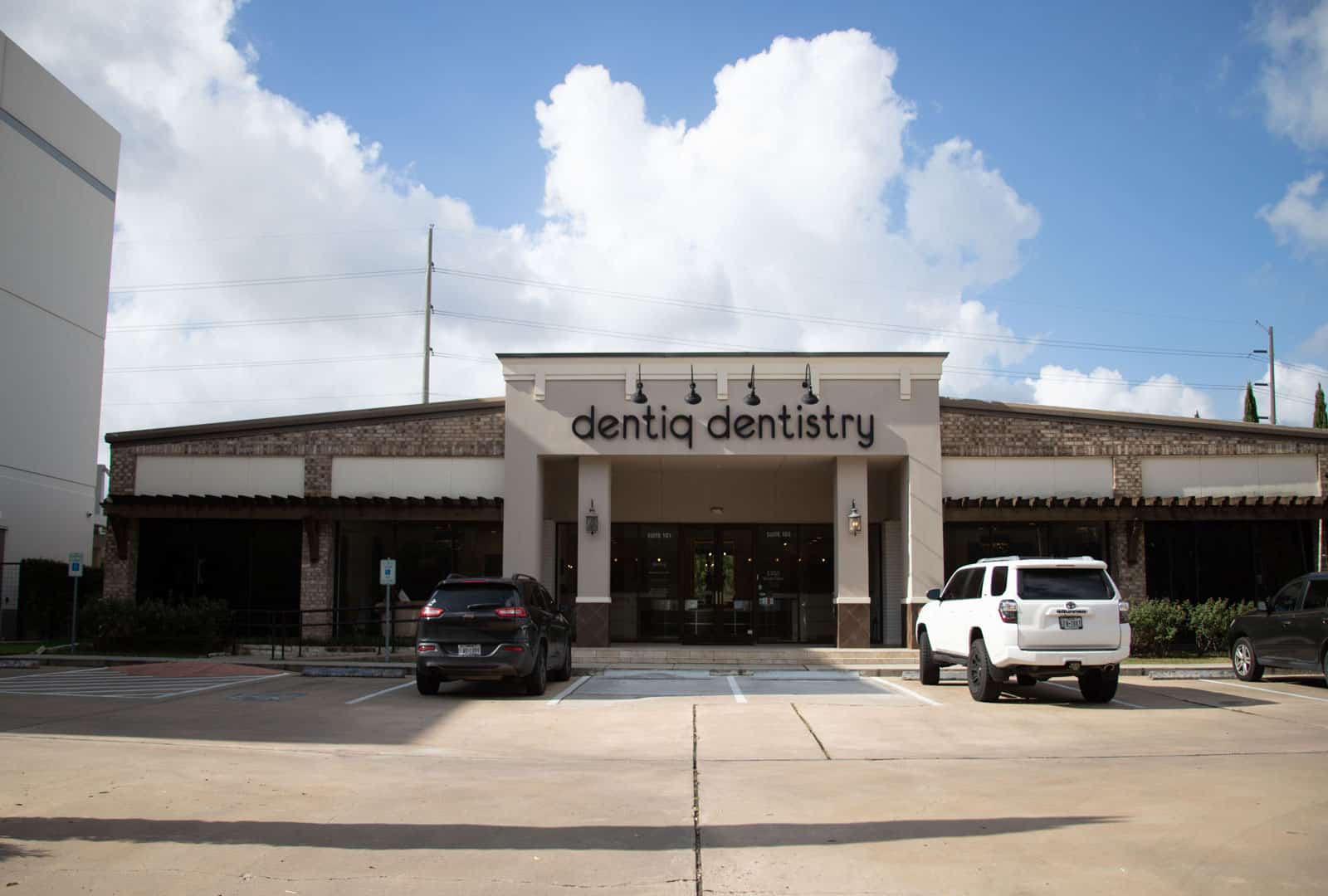
June 8, 2026 · Dentiq Dentistry
CEREC Same-Day Crowns vs. Traditional Crowns: What Houston Patients Should Know
If you’re trying to decide between a CEREC same-day crown and a traditional lab-made crown, here’s the short answer: CEREC crowns are milled in the dental office during a single appointment, typically in one to two hours, while traditional crowns require two separate visits spaced two or more weeks apart, with a temporary crown worn in between. Both can produce durable, natural-looking restorations — the main differences come down to convenience, the technology used, and how your specific tooth situation is best handled. For most Houston patients with a straightforward crown need, either option is clinically sound. The choice often hinges on your schedule, your preference for fewer appointments, and what your dentist recommends after evaluating your tooth.
What Is a CEREC Same-Day Crown?
CEREC stands for Chairside Economical Restoration of Esthetic Ceramics. The technology uses a combination of intraoral digital scanning, CAD/CAM (computer-aided design and computer-aided manufacturing) software, and an in-office milling machine to design and carve a ceramic crown while you wait.
Here’s how a typical CEREC appointment unfolds:
- The dentist removes the damaged or decayed portion of your tooth and shapes it to receive a crown — the same preparation step used for traditional crowns.
- Instead of taking a physical impression with putty, the dentist takes a digital scan of your prepared tooth and the surrounding teeth.
- That scan feeds into software where the crown shape is designed, often taking ten to twenty minutes.
- The milling machine carves the crown from a ceramic block, which takes roughly fifteen minutes.
- The dentist checks the fit and bite, makes any minor adjustments, and permanently cements the crown — all in the same visit.
The ceramic material used in CEREC crowns (most commonly a form of zirconia or lithium disilicate) is strong and closely matches the color of natural tooth enamel. For teeth that bear heavy chewing load, particularly molars, the dentist will consider material strength when recommending CEREC versus other options.
How Traditional Crowns Are Made
Traditional crowns follow a two-appointment process that has been the standard in dentistry for decades.
At the first visit, the dentist prepares the tooth in the same way — removing decay, reshaping the structure — and takes a physical or digital impression. That impression is sent to an off-site dental laboratory, where a technician fabricates the crown by hand or with a combination of manual crafting and lab-based milling. A temporary acrylic or composite crown is placed on the prepared tooth to protect it while the permanent one is being made.
The lab turnaround is typically two to three weeks. At the second appointment, the temporary crown is removed and the permanent restoration is cemented.
Traditional lab crowns can be made from a wider range of materials: porcelain-fused-to-metal (PFM), full zirconia, full porcelain, or in some cases gold alloy for back teeth. A skilled lab technician can layer and characterize porcelain in ways that very closely mimic the subtle color gradations of a natural tooth, which can be an advantage for highly visible front teeth where cosmetic precision matters most. For patients with complex bite issues or significant cosmetic concerns, some dentists prefer sending the case to a lab where a technician can spend hours on customization.
Comparing the Two: Key Differences
Number of appointments: CEREC requires one visit; traditional crowns require two, with a two-to-three-week gap. For patients who work long hours, have limited transportation in Houston traffic, or simply find it difficult to take time off, cutting out a second appointment is a meaningful convenience.
Temporary crowns: With a CEREC crown, you don’t need a temporary. Temporaries are generally fine, but they can come loose, feel different from your permanent crown, and require some dietary restrictions in the interim. Skipping that phase is one of the most frequently mentioned advantages by patients who’ve had both types.
Fit and adjustment: Both methods produce well-fitting crowns in experienced hands. Digital scanning eliminates some of the dimensional inaccuracy that can occasionally occur with physical impressions (especially if the patient gags or the impression material shifts). That said, a highly skilled lab can produce exceptional margins from a good impression, and the quality of any crown — CEREC or lab-made — depends heavily on the clinician’s preparation technique.
Cosmetic results: For front teeth where color matching is critical, some dentists still prefer lab-fabricated crowns because a technician can apply custom staining and layering. CEREC ceramic blocks come in varying shades and can be stained before final polishing, which achieves good results in most cases — but if you’re replacing a crown right next to a natural tooth with unusual coloring, the conversation about lab versus in-office is worth having with your dentist.
Durability: Clinical research generally shows CEREC crowns perform comparably to traditional all-ceramic crowns over five to ten years. Zirconia and lithium disilicate CEREC materials are well-established, and long-term data continues to accumulate. Neither type should be considered more fragile than the other for routine crown indications.
Cost: Pricing varies by practice, material, and insurance. In many cases, CEREC and traditional crowns fall in a similar price range. Some practices charge a slight premium for CEREC; others don’t. If cost is a deciding factor, it’s worth asking your dental office for a clear breakdown before your appointment.
When One Option Might Be Better Than the Other
A same-day CEREC crown is often the practical choice when:
- You need a crown quickly (a broken tooth before a trip, limited flexibility in your schedule)
- You’ve had trouble with temporaries coming off in the past
- You’re comfortable with all-ceramic materials and the tooth being crowned is a premolar or molar with normal biting forces
A traditional lab-made crown might be the better discussion to have when:
- The crown is on a very visible front tooth and cosmetic matching is a high priority
- Your bite situation is complicated — for example, if you have heavy bruxism (grinding), some dentists prefer materials or designs fabricated by a lab technician who can account for those forces precisely
- Your dentist doesn’t have CEREC equipment in-office, or you’re being referred to a specialist for part of the treatment
Neither option is automatically superior. The right answer depends on your tooth, your goals, and what your dentist sees when they examine you.
What to Expect at Dentiq Dentistry
At Dentiq Dentistry in Houston, crown consultations start with an exam of the affected tooth and a conversation about what you’re looking for. If CEREC is available and appropriate for your situation, the dentist will walk you through the same-day process so you know exactly what to expect time-wise. If a lab crown is the better fit, you’ll understand why before committing to anything.
A crown appointment at Dentiq typically involves local anesthetic for comfort during preparation. The CEREC milling process happens while you wait, so you can plan for a longer single appointment — usually two to three hours — rather than two shorter ones. Before the crown is cemented, the dentist will check the fit against your bite and ask you to test it yourself.
If you have questions about which type of crown makes sense for a specific tooth, the clearest path is a direct conversation at the appointment rather than guessing based on general information.
Frequently Asked Questions
How long does a CEREC same-day crown appointment actually take? Most patients are in the chair for roughly two to three hours from start to finish, including preparation, scanning, milling, fit check, and cementation. The milling itself takes around fifteen minutes, but design time, adjustments, and the preparation phase add up.
Does a CEREC crown hurt more than a traditional crown? The preparation process is the same for both — your tooth is numbed with local anesthetic before any work begins. Discomfort after the appointment, if any, is typically mild sensitivity that fades within a few days. There’s nothing about the CEREC process specifically that causes additional soreness compared to traditional crowns.
How long do CEREC crowns last? With proper oral hygiene and regular dental visits, CEREC crowns made from lithium disilicate or zirconia commonly last ten to fifteen years or longer. Longevity depends on the material, the tooth’s location, how well the crown fits, and whether you grind your teeth.
Can CEREC be used for front teeth? Yes, CEREC crowns can be placed on front teeth. For highly visible teeth where nuanced color matching is important, your dentist may discuss whether the in-office ceramic options will achieve the aesthetic result you want or whether a lab-fabricated crown would better match the surrounding teeth.
Will my insurance cover a CEREC crown the same way it covers a traditional crown? Most dental insurance plans cover crowns based on the type of tooth and the material, not the fabrication method. Whether your crown is milled in-office or sent to a lab generally doesn’t change the insurance billing code. Check your specific plan or ask Dentiq Dentistry’s front desk to verify your benefits before your appointment.
Ready to talk through which type of crown is right for your tooth? Schedule a consultation or call Dentiq Dentistry at (713) 526-2904.